The Temple Tax
Gospel according to Matthew
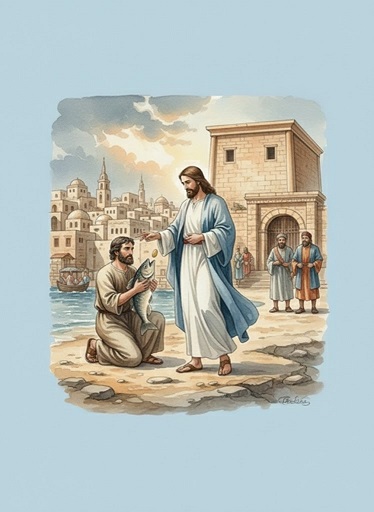
After Jesus and his disciples arrived in Capernaum, the collectors of the two-drachma temple tax came to Peter and asked: --"Does your teacher not pay the temple tax?" Peter replied: --"Yes, he does."
When Peter came into the house, Jesus was the first to speak. --"What do you think, Simon?" he asked. "From whom do the kings of the earth collect duty and taxes—from their own children or from others?" Peter answered: --"From others."
Jesus said to him: --"Then the children are exempt. But so that we may not cause offense, go to the lake and throw out your line. Take the first fish you catch; open its mouth and you will find a four-drachma coin. Take it and give it to them for my tax and yours."
CONCEPTS:
Tax (Tribute): A payment that people must make to use the city's temple.
QUESTIONS AND POINTS FOR REFLECTION
| 1. The Freedom of the Children of God: Jesus explains that the kings' children do not pay taxes. As a future confirmed person, do you truly feel like a "child of God"? Does this condition make you live your faith with joy and freedom, or do you see it as a burden of obligations and religious "taxes"? |
| 2. Avoiding Scandal: Jesus pays the tax "so as not to offend them," even though He is not obligated. Sometimes, out of Christian charity, we must renounce a personal right so as not to harm the faith of others. Can you imagine a situation where you might have to yield to help someone whose faith is weaker than yours? |
| 3. Effort and the Miracle: Jesus could have made the coin appear in His pocket, but He asks Peter to go fishing. Why do you think God asks for our effort (Peter's fishing) to perform His miracles in our lives? What is your part of the "work" in preparing for Confirmation? |
| 4. Jesus' Solidarity: Jesus tells Peter: "pay for me and for you." Jesus joins Peter in his obligations. How does it make you feel knowing that Jesus accompanies you in your daily responsibilities (studies, family, civic duties) and that you are not alone in your burdens? |
| 5. Christians in the World: The passage teaches us that the Christian must be a good citizen. How do you think your faith can help improve your city or neighborhood? In what way can Confirmation make you more responsible in your duties to society (helping those in need, respecting laws, caring for the environment)? |