18. The Golden Calf (Exodus 32)
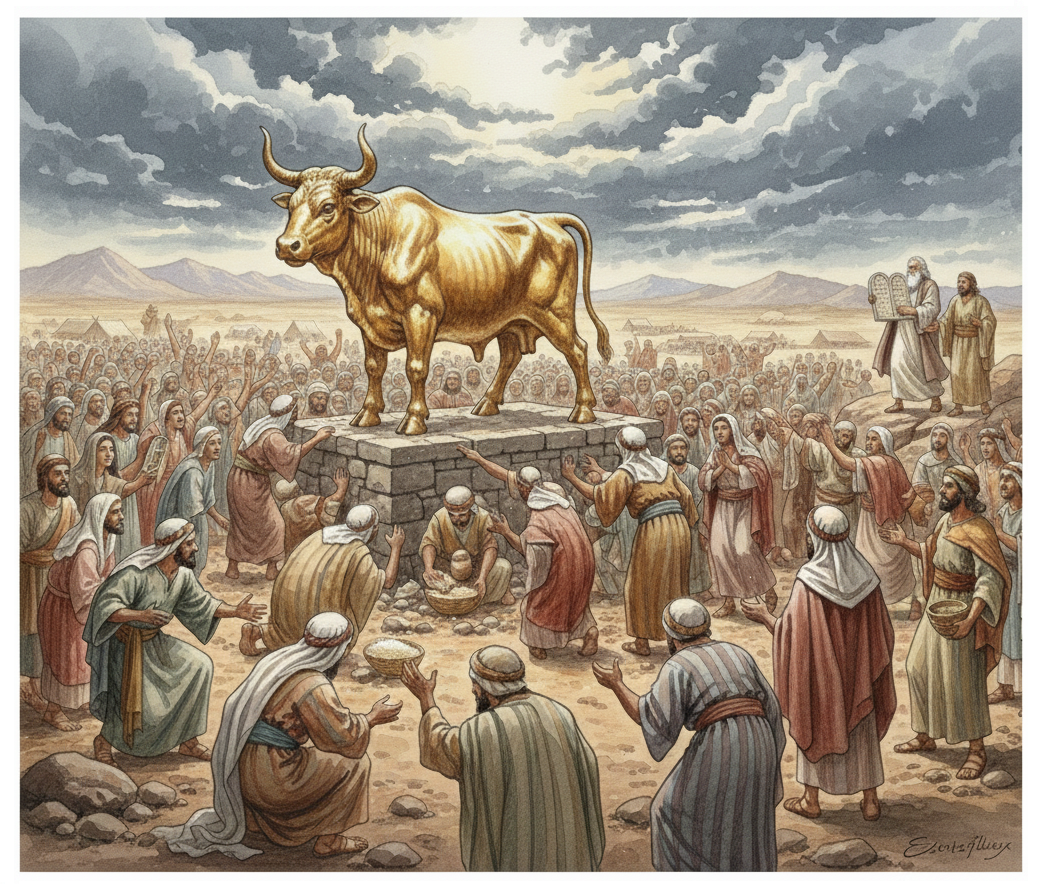
While Moses was on Mount Sinai speaking with God, the people of Israel began to grow impatient due to his delay. Instead of waiting with faith, they asked Aaron to make them a god they could see and touch. Collecting gold earrings from the people, Aaron melted the metal and fashioned a golden calf. The people began to worship it, saying, "These are your gods, Israel, who brought you up out of Egypt," thus breaking the first and most important commandment of the Covenant.
Coming down from the mountain with the tablets of the Law, Moses was outraged to see the idolatry and unrestrained celebration. As a sign that the people had broken the Covenant with God, he threw the tablets and smashed them to pieces. Moses had to intercede before the Lord to ask for forgiveness for the people, showing his role as a mediator. Finally, God, in His great mercy, accepted to forgive them, and Moses had to write new tablets of the Law to renew the commitment to God.
This story warns us about the temptation to create "gods in our own image" when we feel that God is silent or slow to respond. Idolatry is not just worshipping a statue, but putting anything (money, success, pleasure) in the place that belongs only to God. The sin of the golden calf teaches us that faith requires patience and trust in what is unseen, and that God's love is so great that He always offers us an opportunity to repent and start anew.
Key Points according to the Bible
- Impatience in faith: The lack of waiting led the people to seek false and material securities.
- Idolatry: Replacing the invisible God with an object made by human hands breaks the relationship with the Creator.
- Intercession: Moses prays for the salvation of his people, just as Jesus Christ intercedes for us.
- Divine Mercy: Despite the gravity of the sin, God renews the Covenant and does not abandon His people.
Biblical Text
Consult the full biblical text of the golden calf here: USCCB - Exodus Chapter 32
Reflection Activities: Exodus 32
| 1. Text Comprehension: Why did the people decide to make a golden calf, and what was Moses' reaction when he saw it? |
| 2. Doctrinal Content: What does this account teach us about the importance of patience and trust in God when we do not feel His presence? |
| 3. Catechetical Application: What "golden calves" (things that distract us from God) do you identify in your life, and how can you put the Lord back at the center? |