14. The Ten Plagues of Egypt (Exodus 7-11)
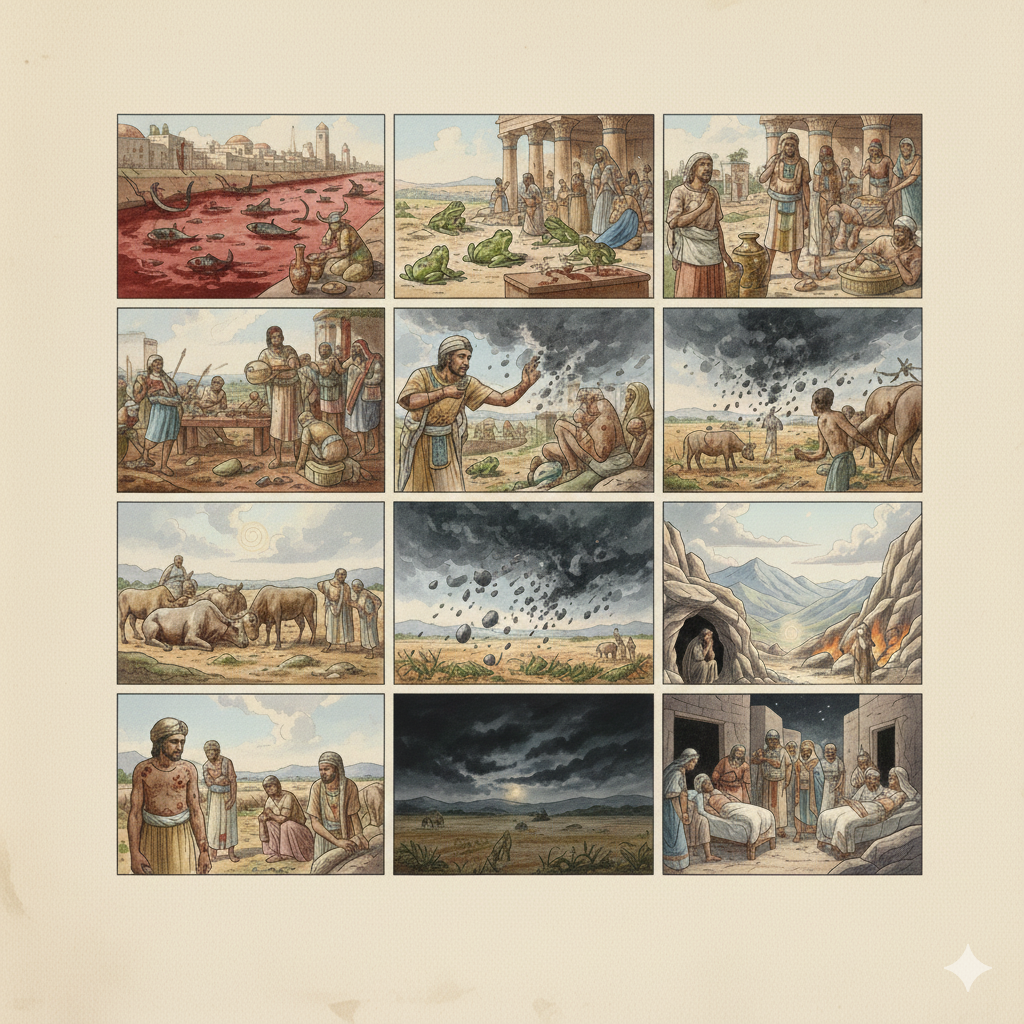
Moses and his brother Aaron appeared before Pharaoh with a clear message from God: "Let my people go." But Pharaoh, with a hardened heart and trusting in his own power and his gods, repeatedly refused. To demonstrate that He is the only true God and to deliver Israel from slavery, the Lord sent ten plagues upon Egypt. These disasters were not mere natural phenomena, but judgments against the false Egyptian gods, showing that neither the Nile, nor animals, nor the sun itself had power before the Creator.
The plagues increased in intensity: the water of the Nile turned into blood, invasions of frogs, gnats, and flies, the death of livestock, boils on the skin, a destructive hailstorm, locusts that devoured everything, and total darkness that covered the land for three days. Despite his people's suffering, Pharaoh only yielded momentarily before retracting again. Finally, God announced the most painful plague: the death of the firstborn, an event that would finally break the Egyptian monarch's resistance.
This biblical account teaches us that sin and pride can blind a person to the point of ignoring God's voice, even in the midst of trials. The plagues are a call to freedom; God wants His people to be free to worship Him. They also remind us that God is the Lord of history and nature, and that His power is always exercised to carry out His plan of salvation, inviting us not to harden our hearts as Pharaoh did, but to be docile to His will.
Key Points according to the Bible
- The Sovereignty of God: The Lord is more powerful than any ruler or false idol on earth.
- Hardening of the Heart: Pharaoh's resistance shows how systematic rejection of the truth ends up destroying the person.
- Justice and Mercy: The plagues are an act of justice for the oppression of Israel, but also an opportunity (missed by Pharaoh) to acknowledge God.
- The Path to Passover: The final plague prepares the people for the great event of ultimate liberation.
Biblical Text
Consult the full biblical text of the plagues here: USCCB - Exodus Chapters 7-11
Reflection Activities: Exodus 7-11
| 1. Text Comprehension: Why did Pharaoh refuse to let the Israelites go, and what was the objective of the plagues according to the story? |
| 2. Doctrinal Content: What does it mean that Pharaoh "hardened his heart," and how can evil eventually dominate a person's will? |
| 3. Catechetical Application: What "false gods" (money, fame, comfort) do you think the world worships today, and how do they prevent us from being truly free? |