13. The Burning Bush (Exodus 3)
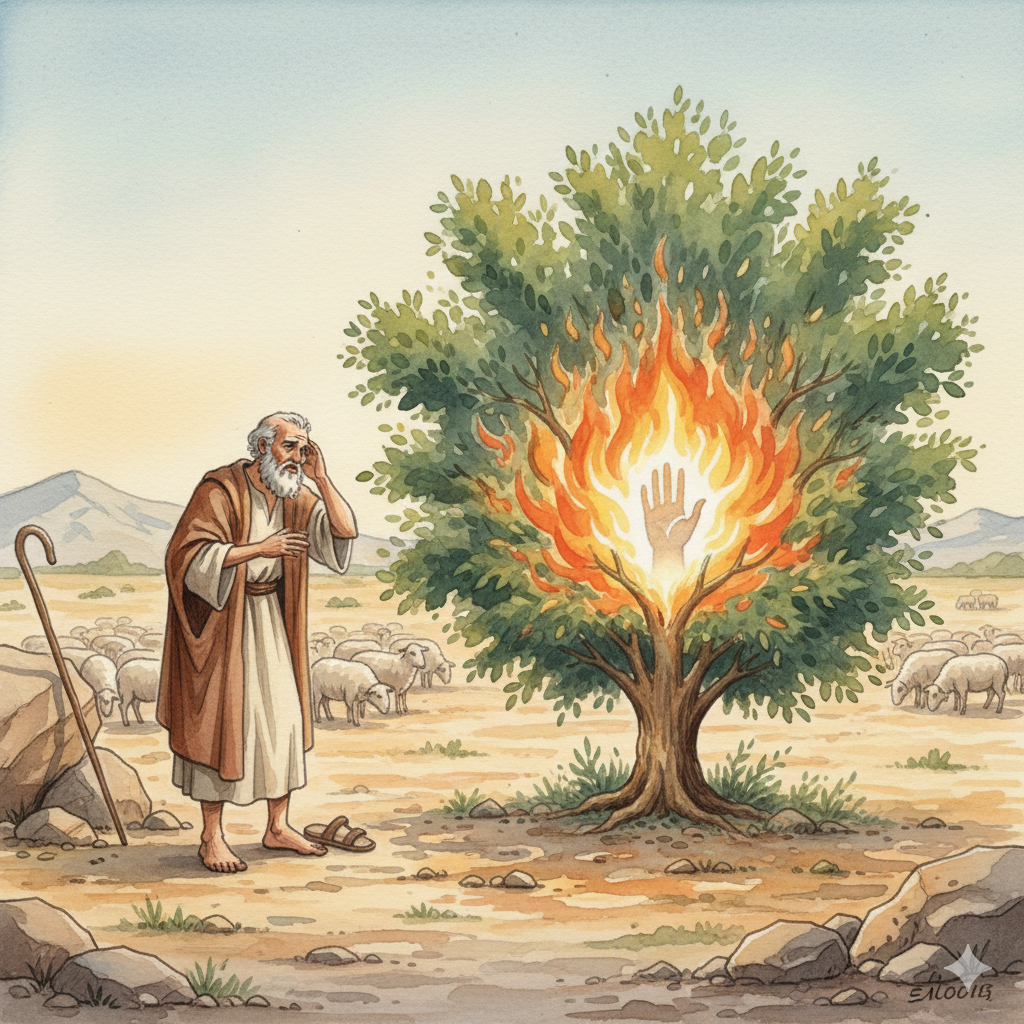
Moses was leading a quiet life as a shepherd in the land of Midian, far from the intrigues of Egypt. One day, while leading the flock toward Horeb, the mountain of God, he witnessed an amazing sight: a bush was burning with bright flames, but it was not consumed. Curious, Moses drew near to see this wonder, and it was then that God called him by name from within the bush. That unquenchable fire symbolized the eternal and holy presence of God.
God asked him to remove his sandals, because the place where he was standing was "holy ground." In this intimate dialogue, the Lord revealed that He had heard the cry of His people enslaved in Egypt and that He was choosing him to deliver them. When Moses, full of doubts, asked for the name of the One sending him, God replied with the mysterious and powerful definition: "I AM WHO I AM." With this name, God presented Himself as the living God, the one and eternal, who is always present to help His children.
Although Moses felt weak and made excuses because of his difficulty in speaking, God promised him: "I will be with you." This encounter on the mountain changed Moses' life and the history of Israel. The burning bush teaches us that God takes the initiative to seek us out in our daily lives, that He respects our freedom but gives us His strength, and that His holiness invites us to draw near with reverence and trust.
Key Points according to the Bible
- God's Holiness: The gesture of removing sandals represents respect before the Mystery of God.
- The Name of God: "I AM WHO I AM" reveals a God who is not an idea, but an active Presence.
- Vocation: God calls people by name and gives them a specific mission.
- The Lord's Proximity: God is not indifferent to human suffering; He hears, sees, and comes down to save.
Biblical Text
Consult the full biblical text of the burning bush here: USCCB - Exodus Chapter 3
Reflection Activities: Exodus 3
| 1. Text Comprehension: What caught Moses' attention about the bush, and what name did God reveal to identify Himself? |
| 2. Doctrinal Content: What does it mean for God to ask Moses to take off his sandals in His presence? |
| 3. Catechetical Application: What excuses do we sometimes make for not following what God asks of us, and how does the promise "I will be with you" help us? |