12. The Birth of Moses (Exodus 2)
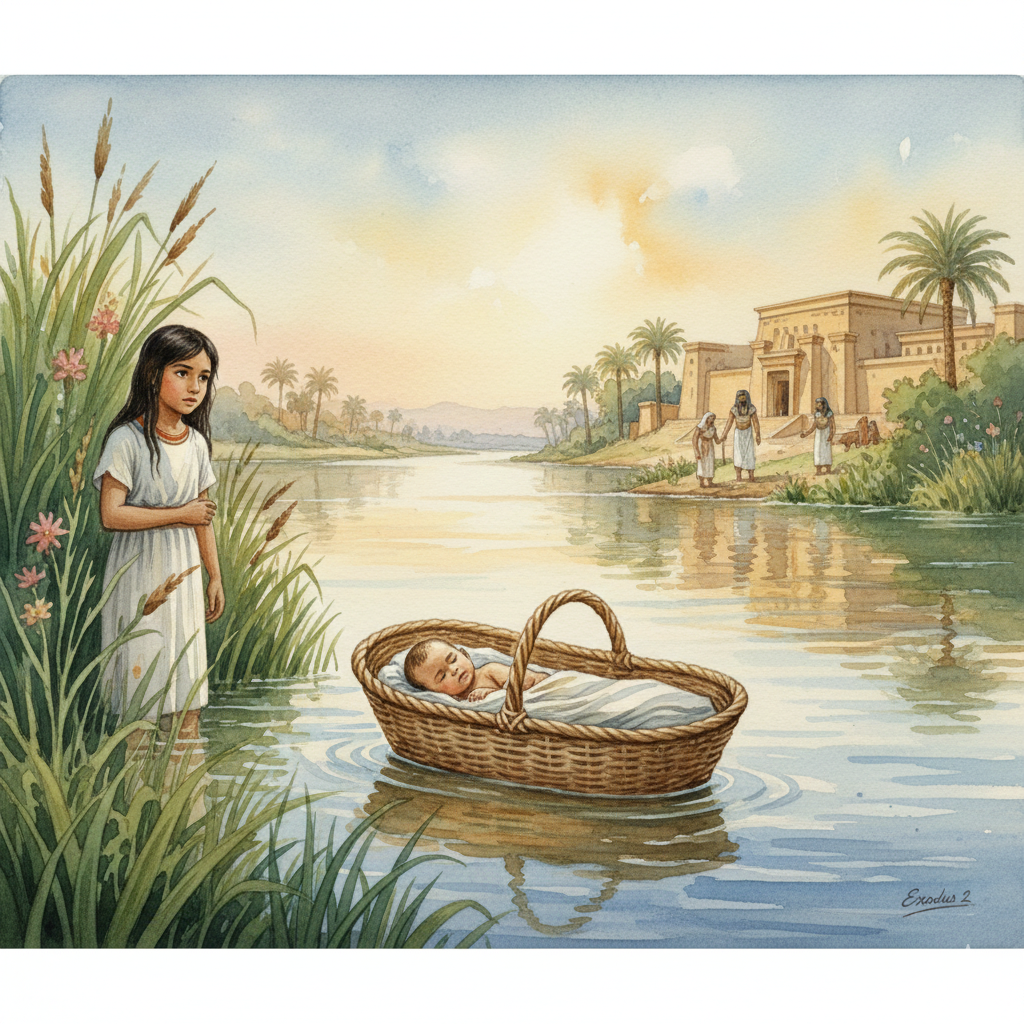
Years after Joseph's death, a new Pharaoh ascended the throne of Egypt. Seeing that the people of Israel were growing and becoming strong, he became afraid and enslaved them, eventually ordering that all newborn Hebrew boys be thrown into the Nile. In this time of cruelty, a Hebrew mother decided to protect her son. After hiding him for three months, she placed him in a papyrus basket coated with bitumen and pitch and left him among the reeds by the riverbank, while his sister Miriam watched from a distance.
Providence led Pharaoh's daughter down to the river to bathe. When she found the child and heard his cry, she took pity on him, even though she knew he was a Hebrew child. Miriam, with quick wit, offered to find a nurse for the baby, thus ensuring that his own mother would raise him until he was old enough to live in the palace. The princess adopted him as her son and named him Moses, which means "drawn from the water," for she said: "I drew him out of the water."
Moses grew up as a prince of Egypt, educated in all the wisdom of the Egyptians, but he never forgot his origin or his people. God was preparing, from his very infancy, the future deliverer of Israel. The birth of Moses reminds us that every person's life has a purpose in God's plans and that, even in the midst of persecution and danger, He is capable of using the most unexpected people to protect and save His children.
Key Points according to the Bible
- Opposing Evil: Moses' mother and Pharaoh's daughter defy Pharaoh's death decree to save a life.
- Moses, Saved from the Waters: He is a figure of the salvation that God would later offer to all His people.
- Providence: God uses Pharaoh's own family to raise and protect the one who would ultimately defeat his power.
- Identity and Mission: Moses is a bridge between two worlds, prepared for a unique mission.
Biblical Text
Consult the full biblical text of the birth of Moses here: USCCB - Exodus Chapter 2
Reflection Activities: Exodus 2
| 1. Text Comprehension: How was Moses saved from death, and how did he end up being raised in Pharaoh's palace? |
| 2. Doctrinal Content: What does this account teach us about God's protection of His chosen ones and the value of human life? |
| 3. Catechetical Application: How can we today defend the most defenseless and maintain our Christian values in an environment that thinks differently? |