3. Cain and Abel (Genesis 4)
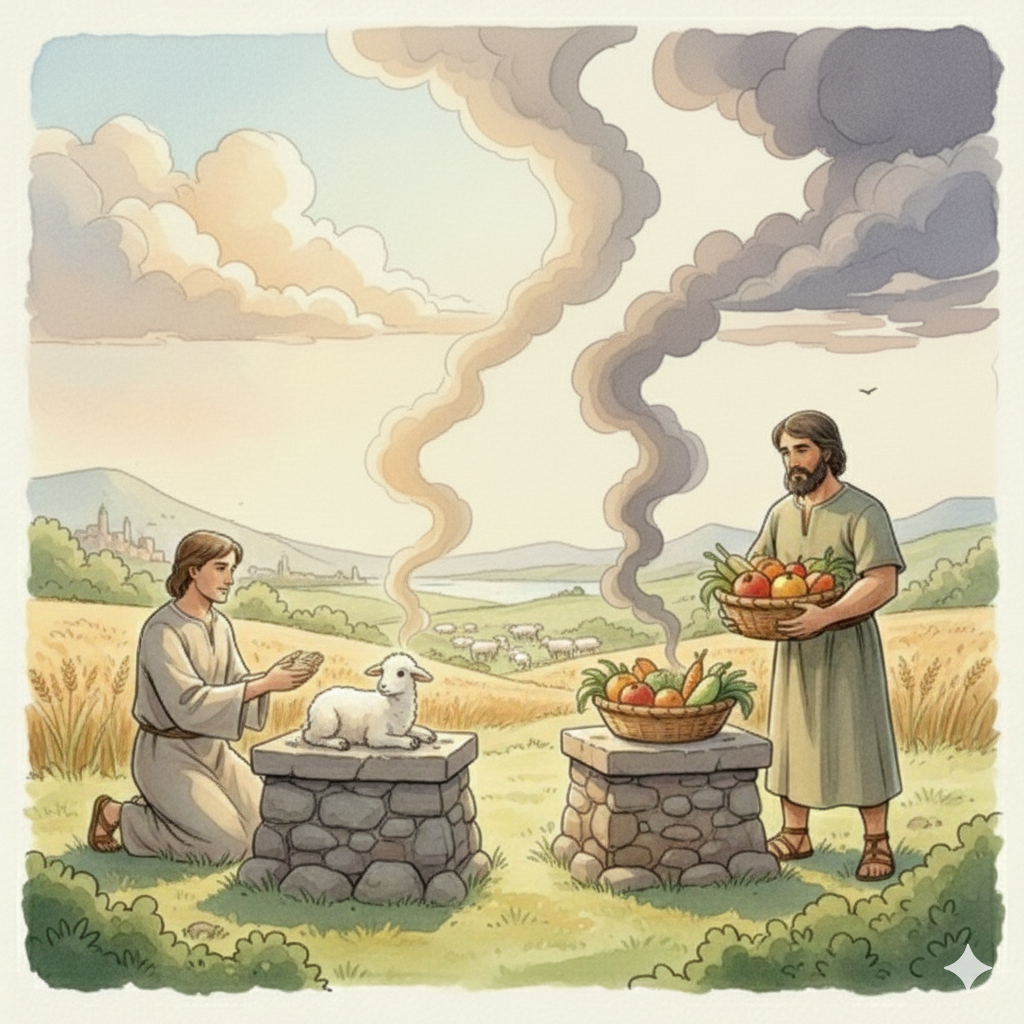
After the expulsion from Eden, the lives of Adam and Eve continued through their sons, Cain and Abel, who represent the two primary vocations of ancient man: agriculture and shepherding. The account places us in a context of worship: both present offerings to the Lord from the fruits of their labor. However, the sacred text notes that God looked with favor on Abel and his offering, while He did not do the same for Cain's. The Bible explains that the difference did not lie in the type of product offered, but in the disposition of the heart; Abel offered the best of his firstlings with faith, while Cain performed an external rite without true inner devotion.
Feeling rejected, Cain's face fell, and hatred began to take root in his soul. God, in His infinite patience, approached Cain not to condemn him beforehand, but to warn him: "Sin is lurking at the door; but you can master it." It is a call to responsibility and conversion that Cain chose to ignore. Envy, which theology defines as sadness at another's good, blinded Cain to the point of leading his brother into the field to murder him. It is the first shedding of human blood, an act that cries out to heaven and definitively breaks the solidarity of original brotherhood.
When God intervened asking, "Where is your brother?", Cain responded with a phrase that has resonated throughout the centuries: "Am I my brother’s keeper?". This cynical response shows the total dehumanization produced by sin. Cain was punished to wander the earth, losing his bond with the soil he soaked with Abel's blood. Nonetheless, even in this judgment, divine mercy appeared: God put a mark on Cain to protect him, preventing violence from multiplying infinitely.
Key Points according to the Bible
- The Primacy of Intention: God does not judge the sacrifice by its material value, but by the righteousness of the one who offers it.
- Freedom Facing Evil: Man maintains the capacity to resist temptation despite the inclination to sin.
- Social Responsibility: Every human being is responsible for the well-being and life of their neighbor.
- The Gravity of Homicide: Human life belongs only to God, and any attack against it directly offends the Creator.
- Mercy in Punishment: God does not desire the death of the sinner, but rather their repentance.
Biblical Text
Consult the full biblical text of Cain and Abel here: USCCB - Genesis Chapter 4
Reflection Activities: Genesis 4
| 1. Text Comprehension: What was the true reason God favored Abel's offering over Cain's, and what warning did He give Cain? |
| 2. Doctrinal Content: How does Catholic theology explain that Cain's sin leads to "dehumanization"? |
| 3. Catechetical Application: In what ways are we called today to be "keepers" of our most vulnerable brothers and sisters? |